
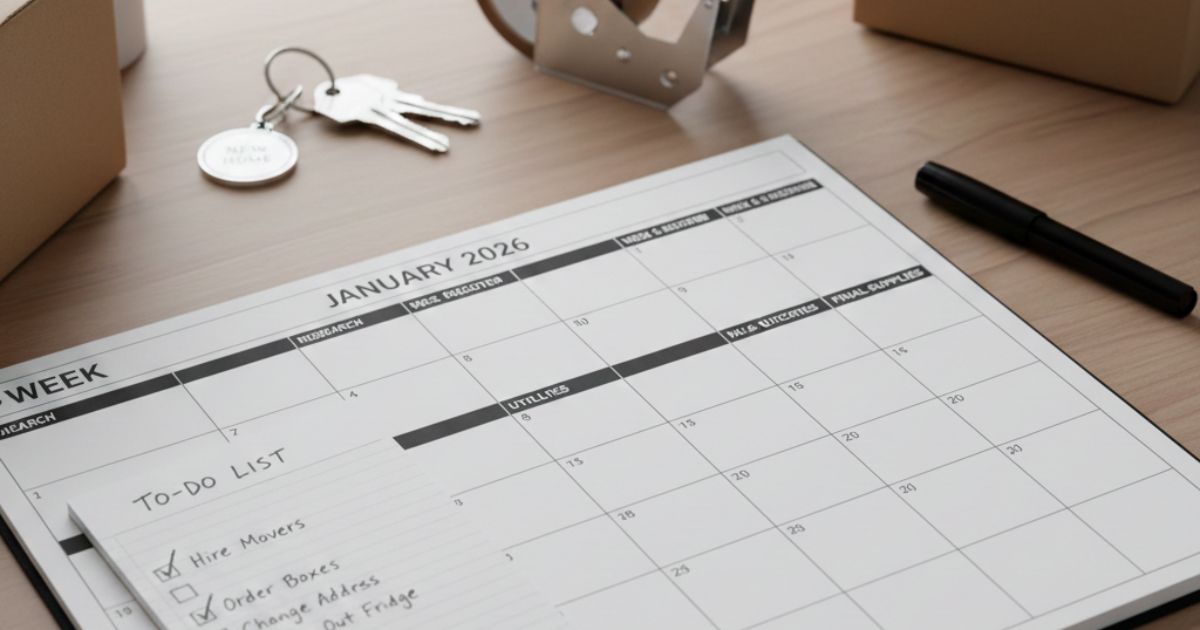
 The secret to a successful relocation isn’t just a bigger truck or more boxes—it’s a head start. Most people underestimate the sheer volume of logistics involved in moving until they are staring down a mountain of unorganized belongings 48 hours before the truck arrives. By adopting a structured moving timeline checklist two months in advance, you transform a chaotic transition into a series of manageable, bite-sized tasks. Whether you are moving across Pittsburgh or out of state, this eight-week roadmap ensures nothing falls through the cracks.
A moving timeline checklist should begin 8 weeks before your move, focusing on decluttering, budgeting, and securing professional movers early.
8 Weeks Out: The Research and Strategy Phase
The two-month mark is all about laying the foundation. You aren’t packing boxes yet; you are gathering the intel needed to make smart financial and logistical decisions. At this stage, your priority is to establish a moving budget. Relocation costs can spiral quickly if you don’t account for packing supplies, travel expenses, and insurance valuations.
This is also the time to begin your “Mover Search.” Don’t wait until the last minute to book a reputable company, especially during peak moving season (May through September). Research local carriers, check their BBB ratings, and verify their USDOT numbers for interstate moves. Actually, let’s step back—getting at least three in-home estimates is the only way to ensure price accuracy. Avoid companies that offer “guaranteed” quotes over the phone without seeing your inventory.
7 Weeks Out: Decluttering and Inventory Management
Now that the logistics are in motion, it’s time to face the clutter. Every item you move has a cost, whether in weight, space, or packing materials. Moving is the ultimate opportunity to prune your belongings. Use the “Four Pile” method for every room: Keep, Donate, Sell, and Trash.
Go through high-volume areas first, such as the attic, basement, and guest closets. If you haven’t used an item in over a year, you likely don’t need it in your new home. For items in good condition, schedule a pickup with a local charity or list them on digital marketplaces. By reducing your inventory by even 20%, you can significantly lower your moving quote and save hours of unpacking on the other end.
6 Weeks Out: Securing Supplies and Finalizing Help
With six weeks to go, it is time to stock up on materials. You will need more supplies than you think. A standard three-bedroom home typically requires 30–40 medium boxes, 15–20 large boxes, and several rolls of heavy-duty packing tape. Consider specialty items like wardrobe boxes for clothing and dish barrels for fragile kitchenware.
If you are planning a DIY move or a hybrid move where you handle the packing, confirm your helpers now. If you’ve hired professionals, this is the window to finalize your date and time. It is also wise to take measurements of your new home. There is nothing more frustrating than moving a heavy oak armoire only to realize it won’t fit through the doorway of your new bedroom.
5 Weeks Out: The Packing Kickoff
The five-week mark is when the physical work begins. Start with “non-essential” items—the things you won’t miss over the next month. This includes:
- Out-of-season clothing and sports equipment.
- Books, DVDs, and collectibles.
- Extra linens and guest room decor.
- Formal dinnerware and small kitchen appliances you rarely use.
Labeling is your best friend during this phase. Don’t just write “Kitchen” on a box; write “Kitchen – Baking Supplies” or “Kitchen – Small Appliances.” This level of detail makes the first 24 hours in your new home much more efficient.
4 Weeks Out: Admin, Utilities, and Address Changes
One month before moving day, your focus shifts to the “paperwork” of your life. You must notify utility companies to schedule your disconnects and new connections. In most cases, you should schedule the utilities at your old home to be turned off the day after you move and the new utilities to be turned on the day before you arrive.
Don’t forget the following address change tasks:
- USPS: Set up mail forwarding through the official website.
- Banks & Financials: Update your billing address for credit cards and loans.
- Insurance: Transfer your homeowners or renters insurance to the new property.
- Schools/Doctors: Request transcripts and medical records if you are moving to a new district.
3 Weeks Out: The “Deep Pack” and Service Coordination
With 21 days remaining, packing should become a daily habit. Aim for 2–3 boxes per evening. As you empty cabinets and closets, start a “Moving Day Essentials” box. This box stays with you in your car—not on the truck—and contains things like chargers, basic tools, toilet paper, and a first-aid kit.
This is also the time to service your vehicles if you are driving to your new destination. Ensure your oil is changed and tires are rotated. If you have pets, check in with your veterinarian to ensure vaccinations are up to date and obtain any necessary travel documents or calming medications.
2 Weeks Out: Final Prep and Food Management
The two-week countdown is about tying up loose ends. Start “eating down” your pantry and freezer. Frozen foods and open perishables cannot be transported by movers, so plan your meals around what you already have. Return any borrowed items to neighbors and pick up your clothes from the dry cleaner.
Confirm your moving day logistics one more time. Where will the truck park? Do you need a parking permit from the city? If you are moving into an apartment or condo, have you reserved the service elevator? Identifying these hurdles now prevents a logistical nightmare on the morning of the move.
1 Week Out: The Final Countdown
During the last seven days, finish all packing except for the “daily use” items (toothbrush, coffee maker, a few changes of clothes). Defrost your refrigerator and freezer at least 24 hours before the movers arrive to prevent leaks. Verify that all high-value items, such as jewelry and sensitive legal documents, are packed in your personal vehicle.
Moving day should be for loading, not packing. By following this moving timeline checklist, you should be able to spend your final morning doing a final walk-through of the empty rooms, checking closets one last time, and handing over the keys with total peace of mind.
Common Questions about a Moving Timeline Checklist
When is the best time to book a moving company?
Ideally, you should book your movers 6 to 8 weeks in advance. If you are moving during the “busy season” (summer) or at the end of a month, earlier is always better to ensure you get your preferred date.
How many boxes will I actually need?
A general rule of thumb is 10-15 boxes per room. However, this varies based on how much “stuff” you have. It is always better to have 10 extra boxes than to run out at 10:00 PM the night before your move.
What utilities should I prioritize first?
Electricity, water, and heat/gas are the essentials. Internet and cable are secondary, but in the age of remote work, you should schedule your ISP installation at least 3 weeks in advance to avoid a service gap.
Should I pack my own fragile items?
Most professional movers will not take liability for boxes you packed yourself (PBO – Packed by Owner) if there is no visible damage to the outside of the box. If you have extremely valuable or fragile items, it may be worth paying for professional packing services for those specific pieces.
How do I handle a “short-notice” move?
If you don’t have 8 weeks, condense the timeline by focusing on the “Big Three” first: Hire movers, give notice to your landlord/mortgage company, and start packing immediately. You can skip the detailed decluttering and sort your items at the new house instead.
Achieving a Seamless Transition
A move is only as stressful as your lack of preparation. By following a structured 8-week timeline, you eliminate the “crunch time” that leads to damaged goods and frayed nerves. The goal is to arrive at your new home with the energy left to actually enjoy it, rather than spending the first week recovering from the exhaustion of a disorganized relocation.
A professional moving partner can handle the heavy lifting, but the organizational success starts with you. When you combine expert moving services with a disciplined planning phase, you set yourself up for the best possible start in your new neighborhood.
At Don Farr Moving, we understand that a move is about more than just boxes—it’s about your life. Our team is here to support you at every stage of your journey. Ready to check “Hire a Mover” off your list? Contact us today for a free estimate and let us help you stay on schedule.